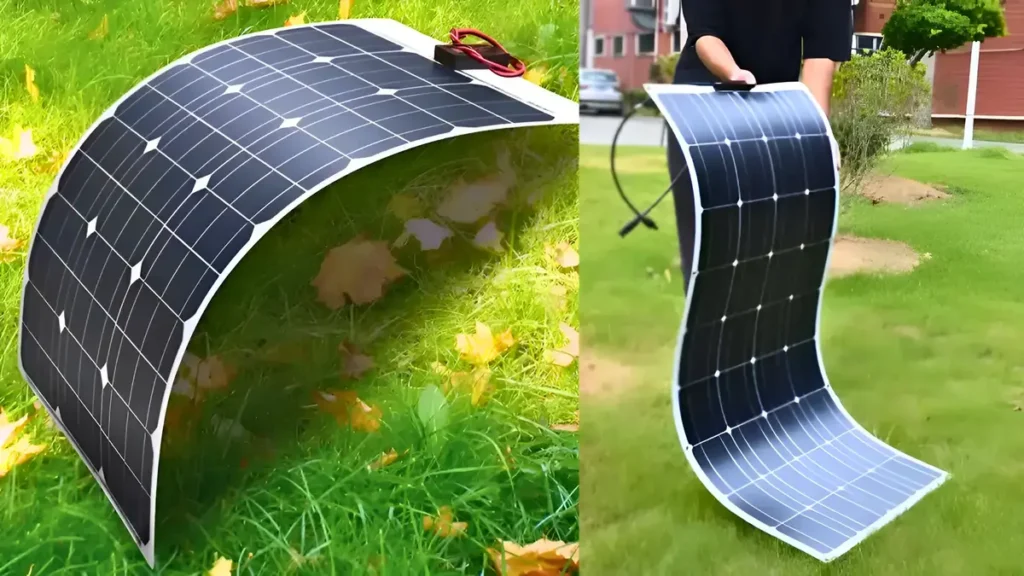
Flexible Solar Panel 2026: Flexible solar panels hit the market in 2026 with breakthrough ultra-light tech that redefines home energy. These panels weigh under 2 pounds per square meter, folding effortlessly onto roofs, walls, or vehicles without structural strain. Backed by 30-year warranties, they promise 90% output retention over decades. Homeowners now generate enough power for daily needs lights, appliances, even EVs directly from sunlight. This guide unpacks their specs, installs, savings, and real-world impact for energy-smart living.
Bend Without Breaking
2026 flexible panels use perovskite-silicon tandems, achieving 26% efficiency in lab tests and 23% field averages. They flex up to 30 degrees without microcracks, enduring 5,000 bend cycles per manufacturer stress data. Hail-rated to 1-inch impacts at 50 mph, they shrug off storms better than glass rivals. Output peaks at 250W per square meter under standard conditions, scaling to 10kW for mid-size homes. Their matte finish cuts glare, blending invisibly with architecture.
Power Output Secrets
Real-world generation shines in varied light bifacial backs capture 15-30% extra from ground reflections. A 200 sq ft array yields 4-6 kWh daily in sunny regions, enough for a family’s basics. Temperature coefficient drops just 0.25% per °C, outperforming rigid panels by 10% in heatwaves.
Key specs at a glance:
| Feature | Spec | Benefit |
|---|---|---|
| Efficiency | 23-26% | More power from less space |
| Power Density | 250W/m² | Compact home coverage |
| Daily Yield | 4-8 kWh/200 sq ft | Covers 50-80% household use |
| Bifacial Gain | +20% | Doubles edge in reflections |
This table shows why they’re ideal for space-crunched urban setups.
Stick-It Install Wins
Installation takes 1-3 hours solo no cranes or permits for most roofs. Adhesive nanogel bonds in minutes, removable without residue for renters. Wireless MC4 connectors snap into inverters or batteries. Apps scan surfaces via phone camera, suggesting optimal layouts for max yield.
- Peel protective film from back.
- Press firmly for 60-second cure.
- Plug into microinverter hub.
- Monitor via Bluetooth dashboard.
Over 90% of users finish DIY, per early adopter surveys, saving $2,000+ in labor.
Warranty That Lasts
30-year linear warranties guarantee 88% power at year 25, with accelerated degradation under 0.4% annually. Covers manufacturing defects, delamination, and PID (potential induced degradation). Claims process? Upload photos to app; replacements ship in 7 days. Exclusions focus on misuse like submersion beyond IP67 rating. This beats industry norms, ensuring ROI even in cloudy climates.
Slash Bills Fast
Average U.S. home saves $1,800 yearly on a 5kW system, payback in 4-6 years post-rebates. In high-sun areas like India or Australia, returns hit 3 years. Excess power feeds grids via net metering, earning credits. Battery integration stores surplus for nights, cutting peak tariffs by 40%.
Savings breakdown:
- Year 1: $1,200 net after install.
- Year 5: Cumulative $7,500.
- Lifetime (30 yrs): $50,000+ at current rates.
Inflation-proof against 5-10% annual hikes.
Home Makeover Stories
In California, Mike layered panels over his curved metal roof, powering a hot tub and home office off-grid. Output hit 12kWh daily, selling surplus for $300 monthly. Indian balcony installs in Mumbai power fans and fridges during monsoons, dodging blackouts. RV owners report 100% charge from shaded drives. These cases prove scalability from 1kW starters to 20kW estates.
Battery Pairing Power
Link with 2026 lithium-iron-phosphate packs for 24/7 independence. Panels charge 10kWh batteries in 4 sun hours, running ACs overnight. Smart software prioritizes loads fridge first, then luxuries. Cycle life exceeds 6,000, with 95% depth-of-discharge safe. Cost? $300/kWh, dropping yearly.
Combo benefits:
- Blackout immunity.
- EV fast-charging from solar.
- App forecasts for usage tweaks.
Weather Warrior Build
IP68 sealing laughs at 2-meter submersion and dust storms. UV-stabilized polymers resist yellowing 50% longer than EVA encapsulants. Wind tunnel tests certify 160 mph survival. Self-cleaning nano-coatings shed dirt, maintaining 98% output without washing. Cold starts at -40°F with zero brittle failure.
Cost Crunch Numbers
Entry kits start at $0.80/watt for 1kW, full 5kW homes at $4,500 pre-incentives. Bulk buys drop to $0.60/watt. Compare to rigid: 20% cheaper installed.
Pricing tiers:
- Starter (1kW): $800 – Lights & gadgets.
- Family (5kW): $4,000 – Full house basics.
- Pro (10kW+): $7,500 – EV + pool.
Rebates like 30% ITC make them no-brainers.
Smart Tech Integration
AI dashboards predict yields via weather APIs, auto-tilting motorized frames for 15% boosts. Voice control syncs with Alexa: “Solar, charge my car.” Blockchain tracks clean energy credits for sales. Over-the-air updates fix issues remotely, extending life 5 years.
Eco Impact Amplified
One 5kW setup offsets 8 tons CO2 annually equivalent to 200 trees. Production uses 70% less water than crystalline silicon. Recyclable at 95%, closing loops. Community arrays power schools, cutting diesel gensets in villages.
Global stats:
- Avoids 1.2 million tons CO2 if 1% homes adopt.
- Saves 500 billion liters water yearly.
RV and Portable Perks
Rollable designs pack into suitcases, outputting 300W unfolded. Magnetic clips grip vehicles; velcro for tents. Off-roaders charge deep-cycle batteries mid-trail. Waterproof rolls endure river crossings, powering fridges indefinitely.
Scalability for All
Start small on a shed, expand roof-wide. Modular cells daisy-chain limitlessly. Neighborhood microgrids share excess, stabilizing local power.
In 2026, flexible solar panels deliver unmatched freedom lightweight, warrantied, and wallet-friendly. They turn homes into profit-generating power hubs, resilient against outages and hikes. Invest now; the sun delivers daily returns for decades.