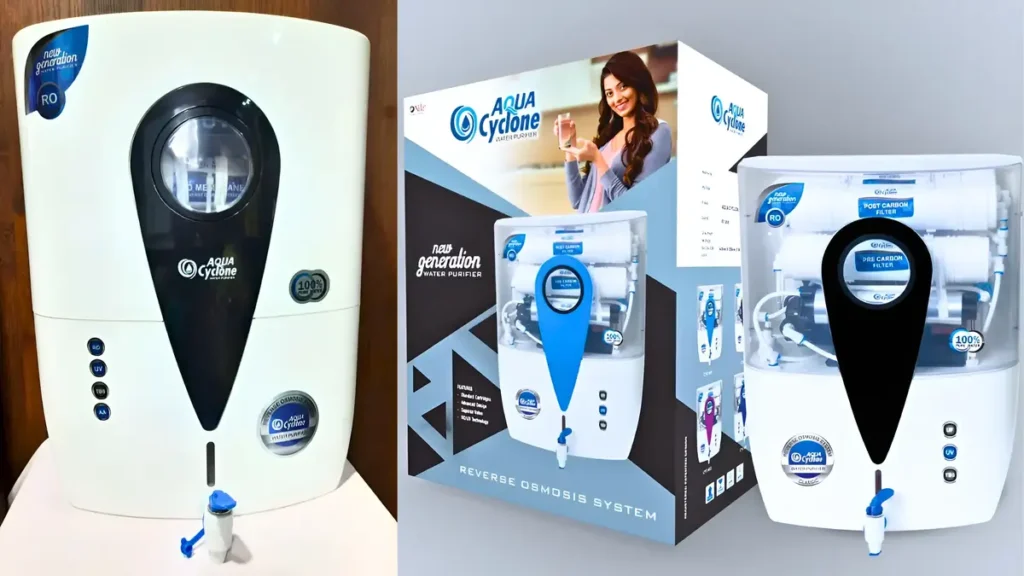
Aqua Cyclone Water Purifier 2026: Finding the best ro water purifier has become simpler yet more sophisticated with copper technology integration. Traditional RO systems remove contaminants effectively, but copper-infused purifiers add antimicrobial properties and health benefits that standard models lack. As a result, copper technology has emerged as the defining feature separating premium purifiers from basic options in 2026.
This guide examines how copper purification works, its health and environmental benefits, and provides in detail comparisons of top models, such as options with active copper dosing mechanisms. You’ll discover selection criteria, long-term cost analysis, and why copper-enhanced RO systems deliver superior value for health-conscious households.
Understanding Copper Technology in RO Water Purifiers
Active copper technology represents a shift in how the best ro water purifier models enhance water safety. This system introduces copper ions into water during purification, delivering antibacterial, antioxidant, and antimicrobial properties without requiring you to store water in traditional copper vessels.
The technology alters water quality by infusing minerals while maintaining purity. Copper ions act as agents against bacteria and viruses, disrupting their vital operations and neutralizing them before they reach your glass. This focused action provides an additional layer of protection beyond standard filtration.
What is Active Copper Technology?
Active copper technology injects copper ions into water as it passes through the purification system. The process makes copper’s health benefits accessible without the 7 to 16-hour wait traditional copper vessels require to eliminate 98% of bacteria. Modern purifiers automate this infusion, controlling copper dosage to precise levels.
The technology enhances a purifier’s ability to remove harmful microbes while enriching water with minerals. Copper ions disrupt microbial functions at a cellular level, destroying pathogens that might survive conventional filtration stages. This dual action addresses both contamination removal and health enhancement in one process.
How Copper Infusion Works During Purification
In advanced purifiers, copper introduction occurs after the RO filtration stage completes. This sequencing ensures all harmful contaminants are removed first, then copper ions are infused in precise amounts to maintain safety and nutritional balance.
The controlled infusion prevents overconsumption risks while delivering consistent benefits. Copper ions interact with water molecules through electrolysis, releasing essential minerals like magnesium, calcium, and iron. This process differs from passive copper storage, where contact time determines mineral transfer.
Water charged with copper elements gains improved mineral balance, particularly beneficial for RO-purified water that typically strips out minerals during filtration. The infusion compensates for this loss, creating water that’s both pure and nutritionally enhanced.
Different Types of Copper Dosing Mechanisms
Two distinct copper ionization systems exist in commercial purifiers. Systems using separate high purity copper and silver electrodes dose both metals accurately according to Faraday’s law. These systems can maintain recommended concentrations of 200-400 μg/l for copper and 20-40 μg/l for silver needed for effective bacterial control.
Systems using copper/silver alloys in compositions like 70/30 and 90/10 ratios operate differently. While these alloys dose copper predictably, silver concentrations fall below minimum recommended levels of 20 μg/l. The efficiency gap stems from silver’s higher oxidation and corrosion resistance compared to copper, making it more noble in the electrolysis process.
Separate electrode systems provide better dosing accuracy for both copper and silver, making them suitable for direct water supply applications. Alloy-based systems work primarily for copper infusion but underperform on silver dosing.
Some manufacturers employ electrolysis dosing, while others use passive release from engineered solid trace metal structures. Both methods have proven effective, with trace metal dosing improving nitrification in biological filters at 10 out of 11 investigated plants. Dosing concentrations below 5 μg Cu/L maintain effluent copper levels under 1.5 μg Cu/L, well within safety guidelines.
Key Benefits of Copper-Infused Water Purification
Copper’s antimicrobial capabilities transform water purifiers from simple filtration devices into active health protection systems. Scientific research spanning centuries validates what ancient civilizations practiced instinctively when storing water in copper vessels.
Antimicrobial and Antibacterial Properties
The antimicrobial effect of copper has been documented since 2600 BC, when Egyptians used copper vessels to sanitize drinking water and treat chest wounds. This historical practice now has scientific validation through modern research.
Copper exhibits what researchers call “contact killing,” where exposure to the mineral causes extensive damage to bacterial cell walls, resulting in their death. The mechanism operates on multiple cellular levels: cell membrane permeabilization, membrane lipid peroxidation, protein alteration, and denaturation of nucleic acids. This multifaceted approach makes it highly unlikely that microorganisms will develop resistance to copper.
Studies demonstrate copper’s effectiveness against dangerous pathogens. When drinking water contaminated with 500 CFU/mL of bacteria including Vibrio cholerae O1, Shigella flexneri 2a, enterotoxigenic Escherichia coli, and Salmonella enterica Typhi was stored in copper pots for 16 hours at room temperature, no bacteria could be recovered on culture medium. Recovery failed even after resuscitation in enrichment broth.
Research confirms copper killed 97% of bacteria present in ICUs, reducing the risk of contracting hospital-acquired infections by 40%. The effectiveness extends to antibiotic-resistant bacteria such as MRSA and VRE, with complete kill of MRSA achieved in 45 to 90 minutes on pure copper at room temperature.
Copper surfaces containing at least 55% to 70% copper eliminated many pathogenic microorganisms including Staphylococcus aureus, Escherichia coli, Enterococcus faecalis, Candida albicans, influenza viruses, and HIV. The US Environmental Protection Agency registered about 300 copper-containing alloys as antimicrobial agents in 2008.
Health Benefits of Drinking Copper Water
Beyond antimicrobial action, copper water delivers specific health advantages. Copper supports immune system function by promoting white blood cell production and enhancing the body’s defense mechanism. The trace amounts leached into water remain well below WHO safety limits, even after 16-hour storage periods.
Copper aids digestion by stimulating peristalsis and promoting healthy gut flora growth. The antibacterial properties eliminate harmful bacteria in the digestive tract, assisting food breakdown. Copper also supports cardiovascular health by regulating blood pressure, heart rate, and lowering bad cholesterol levels.
Exposure to copper correlates with enhanced wound healing. The anti-inflammatory, antibacterial, and antiviral properties accelerate healing processes and prevent infections. Consumption of 2 liters of copper-charged RO water daily can meet approximately 30% of the recommended daily allowance for copper for adults.
Final Word: Aqua Cyclone Water Purifier 2026
Copper stands out as an environmentally friendly purification element. The metal can be recycled efficiently, unlike synthetic alternatives used in water treatment. Copper’s durability means purifiers using copper components last longer, reducing replacement frequency.
Copper’s antibacterial capabilities reduce chemical usage required for water purification. This lowers the need for synthetic chemicals and supports more environmentally sound water treatment procedures. Copper is abundant, cheap, and the easiest metal to recycle, making it the friendliest metal for the environment.